How does wedding bingo work?
Instead of a host calling words, guests watch actual wedding events. Each card has 25 (or 16/9) wedding moments. When an event happens, anyone can cross it off. First to complete a row/cross/full house shouts BINGO.
Our wedding bingo is a fantastic ice-breaker during weddings — especially with crowds where not everyone knows each other. Guests cross off icons they see happening: first kiss, first dance, speeches, cake cutting.
Type one sentence and the AI delivers 30 original bingo items in English. World's first AI bingo generator.
Instead of a host calling words, guests watch actual wedding events. Each card has 25 (or 16/9) wedding moments. When an event happens, anyone can cross it off. First to complete a row/cross/full house shouts BINGO.
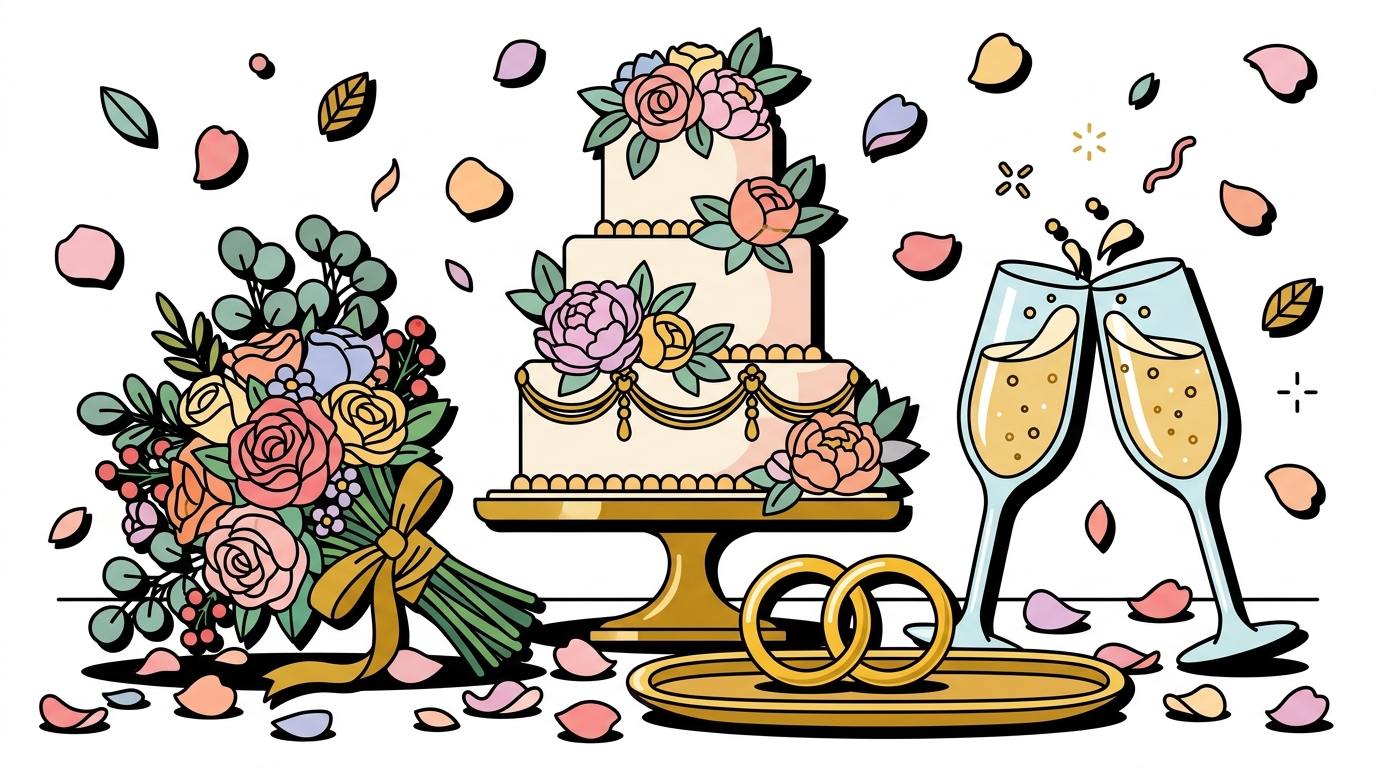
Bride in dress, groom in suit, exchanging rings, first kiss, father-daughter dance, ring bearer, bridesmaids, bouquet toss, cake cutting, speeches, dance floor, kids dancing, etc.
Picture a summer garden reception where cousins from distant cities meet for the first time, where work colleagues sit beside childhood friends, and where three generations gather under string lights strung between ancient oak trees. The bride's university roommates exchange polite smiles with the groom's fishing buddies. This beautiful collision of separate worlds is the magic of weddings, but it also creates that initial awkwardness as guests settle into their seats, wondering whom to talk to while waiting for the ceremony to begin. Wedding bingo transforms this social challenge into shared laughter. Marriage celebrations have evolved dramatically across centuries. Medieval European weddings were public affairs where communities witnessed vows to ensure their legality. Victorian England introduced the white dress tradition we recognize today, while the tiered cake originated from a French custom of stacked sweet buns. Modern weddings blend these historical threads with personal touches, creating events that honor tradition while celebrating individuality. What remains constant is the gathering of communities to witness two families becoming one. Wedding bingo thrives in three distinct scenarios. First, during cocktail hours at receptions for 80 to 150 guests, it gives attendees an activity while photographers whisk the wedding party away for portraits. Guests actively observe the celebration rather than awkwardly nursing drinks. Second, at intimate destination weddings with 20 to 40 guests spanning multiple days, bingo cards distributed at welcome dinners help extended families and friend groups mingle before the main event. Third, at casual backyard weddings or rehearsal dinners, bingo serves as structured entertainment that requires no DJ or formal games coordinator. Wedding planners love bingo because it requires minimal supervision once explained, unlike complex reception games demanding constant facilitation. Bridesmaids and groomsmen appreciate it as a rehearsal dinner activity that includes everyone without embarrassing the couple. Couples themselves benefit most, knowing their carefully curated guest list is connecting and laughing together rather than remaining in isolated social clusters. For parents hosting the celebration, it solves the perpetual question of how to entertain guests during the inevitable lulls in wedding day timelines, particularly that tricky window between ceremony and reception when guests arrive at venues before the wedding party.
Preparation for wedding bingo begins with printing one card per guest or couple, depending on your group dynamics. Place cards on reception seats before guests arrive, or hand them out during cocktail hour with small pencils or elegant pens that match your color scheme. Consider using metallic gold or silver markers for an upscale touch. For outdoor weddings, provide clipboards so cards don't blow away during garden ceremonies. The classic rules work beautifully: guests mark squares when they witness corresponding moments like the first kiss, cake cutting, or emotional speeches. However, two popular variants enhance wedding play. The continuous play version runs throughout the entire event from ceremony through reception. Guests keep cards at their tables, marking squares as moments naturally unfold, with winners announced during dessert or dancing. This version works perfectly for full-day celebrations. The photo challenge variant requires guests to capture phone photos of marked items as proof, creating a crowdsourcing opportunity where the couple receives candid guest perspectives of their special day. For typical wedding scenarios, standard five-by-five cards accommodate 24 items plus the free center space, ideal for receptions lasting three to four hours with 50 to 200 guests. Smaller intimate gatherings of 15 to 30 people work better with four-by-four cards containing fewer items to ensure multiple winners emerge. Larger destination wedding weekends might use different themed cards each day. Timing considerations matter significantly. Distribute cards 15 minutes before the ceremony begins so guests understand the game without rushed explanations. For ceremony-only bingo, expect rounds lasting 30 to 45 minutes. Reception bingo typically runs 90 minutes to two hours, allowing time for traditional wedding events to occur naturally. Announce the first winner once someone completes a line, but continue play for blackout rounds where guests chase full-card completion, typically achieved as dancing begins and final traditional moments like bouquet tosses conclude the structured portion of celebrations.
These twelve wedding traditions and symbols appear on cards because they represent the universal moments guests anticipate and celebrate together:
The table team version transforms bingo into collaborative fun perfect for seated receptions. Each table of eight to ten guests shares one giant card, discussing and deciding together when to mark squares. This variation encourages conversation among tablemates who may be strangers, naturally breaking ice as they debate whether that was technically the first kiss or just a peck during vows. Award prizes to the winning table, perhaps a bottle of champagne or priority access to the dessert bar, creating friendly competition between the bride's side and groom's side. Pattern-based winning adds thematic creativity beyond simple lines. The heart pattern requires guests to mark five specific squares forming a heart shape on their cards, perfect for wedding symbolism. The wedding ring pattern uses the outer edge squares forming a square border around the free center space. The champagne glass pattern marks a diagonal plus the bottom row forming a V-shape with a stem. These themed patterns extend gameplay and reward guests who stay engaged throughout longer receptions, with different prizes for each pattern completion. Prize selections should match wedding elegance while remaining lighthearted. Consider mini champagne bottles, gourmet chocolate boxes, scented candles in the wedding colors, lottery scratch tickets for good luck, gift cards to local coffee shops, or photo frames for guests to remember the day. For budget-conscious celebrations, create prizes from wedding favors by bundling three together. The best prize idea gives winners first access to the buffet line or guaranteed participation in the bouquet or garter toss, integrating bingo winners into other reception traditions. The hybrid digital-physical version serves destination weddings and multi-day celebrations beautifully. Create a private Instagram hashtag where guests post photos of witnessed bingo moments, with the wedding party monitoring submissions and announcing winners via the DJ or on a projection screen. This variation generates authentic content the couple treasures forever while maintaining the competitive bingo spirit. Guests still receive physical cards as keepsakes, but verification happens through their smartphones, appealing to tech-savvy younger attendees while grandparents enjoy traditional paper marking.
The only online bingo generator with AI, Spotify Web Playback, live caller AND scoreboard. For schools, parties, corporate events and music bingo nights.