Why birthday bingo?
Kids parties are great, but sometimes a group of wild kids needs structure. Birthday bingo keeps everyone focused and is a great pause activity between the bouncy castle and the cake.
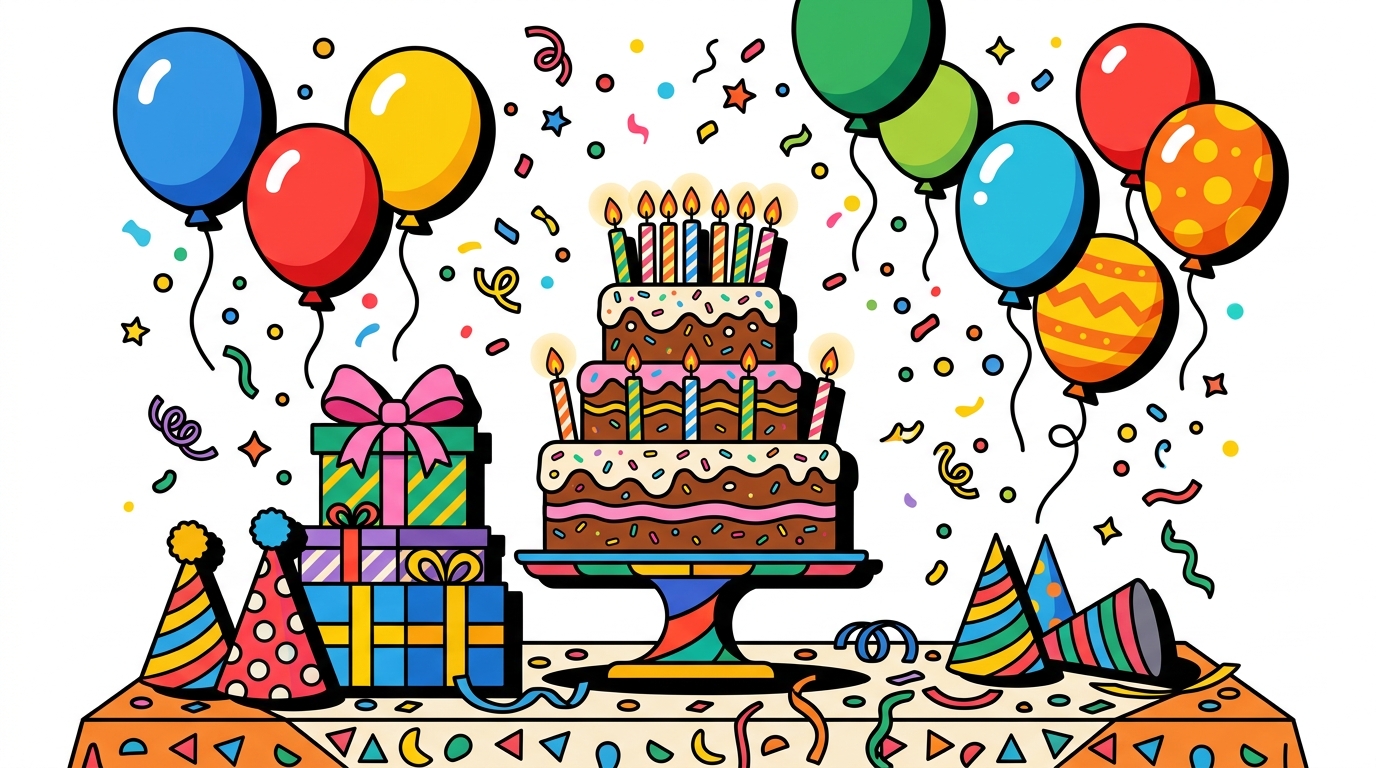
A kids party gets extra fun with birthday bingo. Our generator automatically fills cards with cake, candles, balloons, streamers and everything party-related. Print cards for all guests.
Type one sentence and the AI delivers 30 original bingo items in English. World's first AI bingo generator.
Kids parties are great, but sometimes a group of wild kids needs structure. Birthday bingo keeps everyone focused and is a great pause activity between the bouncy castle and the cake.
80+ birthday icons: cake, candles, balloons, streamers, gifts, party hats, confetti, birthday card, ice cream, candy, banner, fireworks, sparklers, bouncy castle, party whistle, and more.
Picture this: fifteen seven-year-olds hopped up on birthday cake, their energy reaching fever pitch as presents pile up and sugar courses through their veins. You need something to channel that chaos into joy rather than mayhem. This is the moment when birthday bingo transforms from a simple game into your secret weapon for party success. Birthday celebrations as we know them today emerged surprisingly recently in human history. While ancient Romans celebrated the births of emperors and early Christians eventually adopted saint's day observances, the modern children's birthday party didn't crystallize until the Industrial Revolution made mass-produced toys, printed invitations, and leisure time accessible to middle-class families. By the 1950s, the birthday party had become a cultural institution across Western countries, complete with the now-familiar rituals of cake, candles representing years lived, wrapped presents, and games that keep young guests entertained. Today, birthday bingo thrives in three distinct environments. First, elementary school classrooms use it during that magical fifteen minutes before dismissal when a student's parent arrives with cupcakes and treats. Teachers print cards for twenty-five students, calling items while maintaining just enough structure to prevent complete pandemonium. Second, family gatherings where cousins aged four to twelve need entertainment that works across age gaps, typically played in living rooms while adults prepare the meal or clean up after cake. The mixed-age dynamic means older children can help younger ones spot items, fostering cooperation rather than competition. Third, children's entertainment venues and party planners incorporate birthday bingo into their packages, running multiple quick rounds between bounce house sessions or craft activities, using it as a calm-down transition that still feels festive. Parents hosting home parties benefit most, gaining a structured twenty-minute activity that requires minimal setup and costs nothing beyond printing. Teachers appreciate having an inclusive game where every child can participate regardless of athletic ability or competitive temperament. Event planners value its flexibility, easily scaling from eight to forty players, filling time gaps when activities run short, or extending successful parties when energy remains high. The beauty lies in its simplicity: no complex rules to explain to excited children, no equipment beyond paper and markers, and built-in excitement as each called item brings players closer to victory.
Generate and print your birthday bingo cards before party day, aiming for two to three cards per child so early winners can continue playing with fresh cards. For markers, small wrapped candies work beautifully at birthday parties, serving double duty as game pieces and take-home treats. Mini chocolate coins, colorful M&Ms, or small gummy bears let children eat their markers after each round, building anticipation. Alternatively, provide small star stickers that children place over called items, creating a satisfying tactile experience without the sugar rush. For the standard birthday party version with eight to fifteen children, use five-by-five cards and play until someone achieves a complete row, column, or diagonal. This typically takes seven to twelve minutes per round, perfect for attention spans of children aged five to ten. With younger players aged three to five, switch to four-by-four cards and play for simpler patterns like the four corners only, reducing complexity and shortening rounds to five minutes. The birthday sing-along variant adds interactive flair: when you call items like 'Lied' or 'Dans', everyone performs a five-second birthday song snippet or dance move before marking their cards. This burns excess energy while keeping non-winners engaged. For mixed-age groups including teenagers or adults, implement the progressive jackpot rule where the first round winner receives a small prize, the second round winner gets something better, and the final championship round offers the best prize, typically first pick from the goodie bags or an extra slice of cake. Timing matters significantly. Play bingo after cake but before free play time, using those twenty to thirty minutes when children are satiated but still gathered together. Avoid playing during present opening, as the birthday child deserves undivided attention for that ritual. For two-hour parties, two rounds of bingo provide ideal pacing. For three-hour celebrations, prepare for three rounds, or save the final round as a goodbye activity while parents arrive for pickup.
These twelve items appear on birthday bingo cards because they represent the universal language of celebration that transcends cultures and generations.
Team Birthday Bingo works brilliantly when you have twenty or more children, dividing them into groups of four or five with one shared card per team. Teams huddle together, searching collectively for called items and marking them by group consensus. This variation reduces the pressure on individual children who struggle with visual scanning while teaching cooperation. Award prizes to the entire winning team, such as matching bracelets or a shared bag of treats they can divide. Thematic winning patterns add birthday flair beyond standard rows. Play for a birthday cake shape by marking the bottom row plus the center square of the row above it, creating a cake-with-candle silhouette. Alternatively, require players to mark all four corners plus the center free space, forming a present-shaped pattern. For advanced players aged nine and up, play blackout rounds where covering every square wins, extending gameplay to fifteen minutes and building suspense as children get tantalizingly close to completion. Prize structures specific to birthdays should reinforce rather than overshadow the birthday child's special status. Offer small consolation prizes like stickers or pencils for all players, with winners receiving medium prizes such as bouncy balls or small toys, while ensuring the birthday child receives something special regardless of game outcome, perhaps serving as the caller for the final round. Some families create a prize wheel that winners spin, randomizing rewards and adding an extra element of chance that feels fair to young children sensitive about competition. Hybrid birthday bingo accommodates modern realities where some guests attend virtually due to distance or illness. Email digital bingo cards to remote participants before the party, then video call them during gameplay. Use a shared screen to display called items visually, allowing both in-person and virtual players to compete simultaneously. Remote winners can receive their prizes via mail after the party, maintaining inclusion. This variation proved essential during pandemic birthdays and remains valuable for military families or those with long-distance relatives wanting to participate in celebrations despite geographical separation.
The only online bingo generator with AI, Spotify Web Playback, live caller AND scoreboard. For schools, parties, corporate events and music bingo nights.