Summer bingo on the go
Beach holiday or long car ride? Print 4-8 unique summer bingo cards and let kids cross off items they spot. Keeps them busy for hours and is free to download.
Entertain the kids on a long summer day or beach holiday with our free summer bingo. 80+ summer icons: sun, umbrella, seashell, ice cream, sandcastle and more. Print cards for the beach or a long car ride.
Type one sentence and the AI delivers 30 original bingo items in English. World's first AI bingo generator.
Beach holiday or long car ride? Print 4-8 unique summer bingo cards and let kids cross off items they spot. Keeps them busy for hours and is free to download.
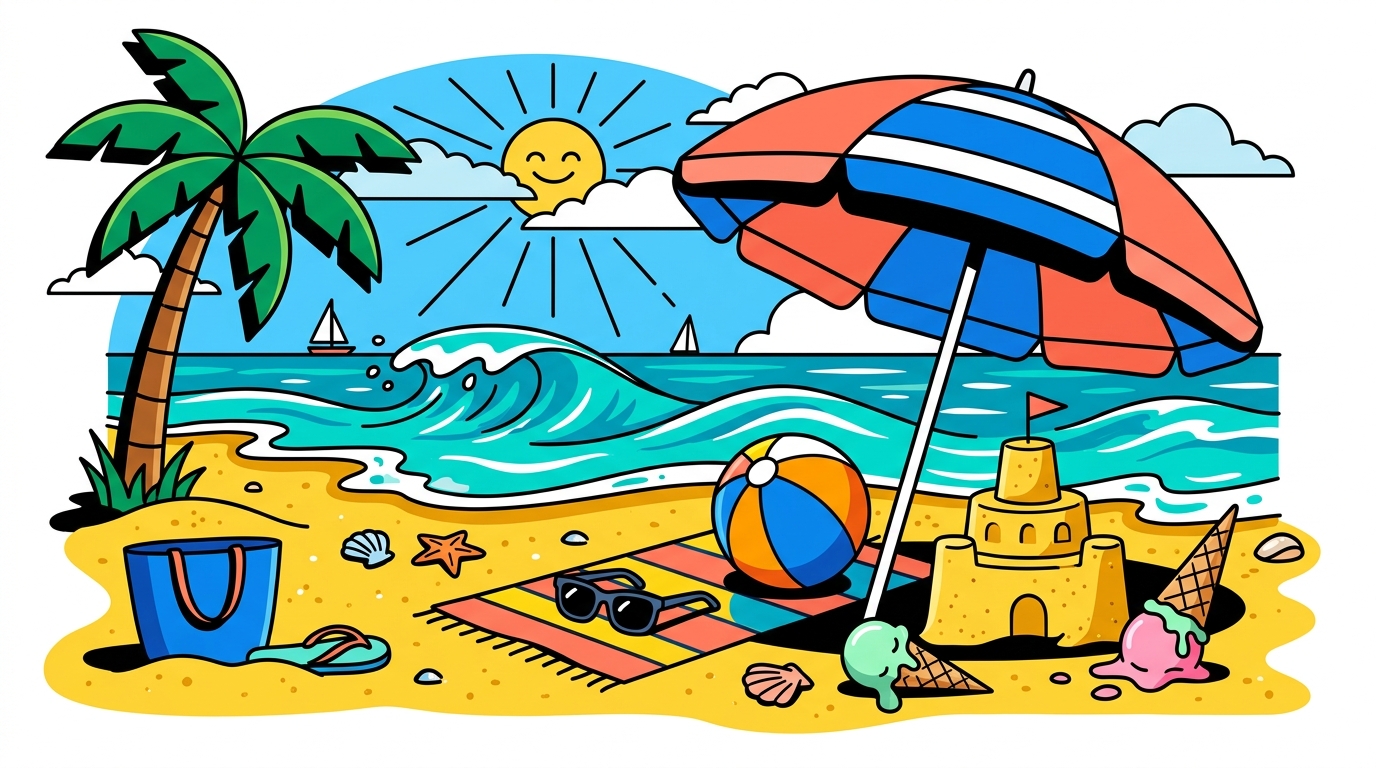
Sun, umbrella, ice cream, seashell, starfish, fish, crab, seagull, surfboard, swim ring, flip-flops, sunglasses, towel, ball, sandcastle, waves, palm tree, and many more.
Picture this: a family of eight sprawled across beach towels at the shoreline, the youngest ones squinting at laminated bingo cards as waves lap at their toes, calling out "Schelp!" each time they spot a seashell in the foam. This isn't just a game—it's a summer ritual that transforms passive beach-sitting into active observation, turning restless energy into focused fun. Summer and beach bingo emerged from the practical needs of parents and educators facing the unique challenge of long summer days. Unlike winter holidays with their structured festivities, summer stretches endlessly, especially during beach vacations where the pattern of swim-eat-swim-repeat can leave children understimulated. The beach itself offers a perfect bingo landscape: constantly changing yet reliably consistent, with seagulls, surfers, sandcastles, and sun umbrellas appearing in natural rotation. Coastal communities have long used observation games to teach children about marine life and beach safety, and bingo's adaptable format makes it ideal for this environment—cards can be laminated against sand and spray, games pause naturally when someone needs to swim, and the open-air setting accommodates any group size. Three scenarios showcase summer bingo's versatility. First, primary school teachers during the final week before summer break use beach-themed bingo for combined ages six through ten, keeping mixed-age groups engaged while reviewing vocabulary about seasons, weather, and marine biology. The game works perfectly when attention spans shorten and traditional lessons feel impossible. Second, family beach reunions of twelve to twenty people spanning three generations rely on beach bingo as the rare activity that genuinely includes everyone—toddlers spot colorful umbrellas, teens grudgingly participate when prizes are involved, and grandparents enjoy the gentle competition. Third, summer camp counselors managing groups of fifteen to thirty children use it during indoor backup days when weather turns stormy, maintaining the beach theme while stuck inside the lodge. Parents of children aged four to twelve benefit most, gaining a structured activity that requires minimal setup and works in multiple settings: actual beaches, poolsides, backyard water play, or rainy-day indoor alternatives. Teachers appreciate the vocabulary reinforcement and easy differentiation—younger children match pictures while older ones read words. Event planners at beach resorts and summer festivals use large-group versions as crowd entertainment that requires no electricity, no complicated rules, and no expensive equipment.
Preparation for beach bingo requires water-resistant thinking. Laminate your printed cards or slip them into clear plastic sleeves—sand and splashing are inevitable. Bring waterproof markers or small flat stones as daubers; traditional chips blow away in coastal breezes. If playing on actual sand, bring clipboards or sturdy cardboard backing so players have firm surfaces for marking. For indoor summer versions, small seashells collected earlier make perfect thematic markers that children love handling. The standard rules adapt beautifully to beach settings. Players mark items as they spot them in the real environment around them—an actual seagull landing nearby, someone building a visible sandcastle, a beach ball bouncing past. This transforms bingo from abstract matching into active observation. Alternatively, use call-out mode where one adult draws item names from a beach bucket while players mark their cards, ideal for younger children or when the environment is less predictable. For mixed-age groups, try progressive difficulty: younger children mark any ice cream, while older players must spot specific types like cones versus popsicles. Card size matters significantly in beach contexts. Standard five-by-five grids work best for players aged seven and up, providing enough complexity for fifteen-minute rounds. Younger children aged four to six manage three-by-three grids better, completing games in six to eight minutes before attention drifts toward actual swimming. For groups, print one card per player for individual competition, or create team play with two to four people sharing one card, especially effective with families mixing ages. Timing considerations: Play between swimming sessions when children are damp but not ready to leave the beach, typically mid-morning or mid-afternoon. Single rounds last seven to twelve minutes depending on winning pattern. Plan three-round tournaments for sustained engagement, offering small breaks between rounds for snacks or quick dips. Avoid the hottest midday hours when concentration falters and shade becomes essential for any stationary activity.
These twelve items appear on nearly every summer and beach bingo card because they represent the universal coastal experience across cultures and climates:
Team play works exceptionally well for beach bingo when groups include wide age ranges. Create family teams of three to five mixing ages, sharing one card. Younger children spot and point, older ones verify and mark, adults adjudicate disputes about whether that distant object really qualifies as a boat. First team to complete their pattern wins, but the real benefit is how it forces intergenerational cooperation. Teams naturally coach younger members on what to look for, turning the game into informal beach vocabulary lessons. Winning patterns can reflect summer themes for added interest. Try "sunburst" where players must complete the center FREE space plus all four corners and middle edges, creating a star shape. Or "wave pattern" requiring any complete horizontal line, fitting the beach theme literally. For longer games, "beach umbrella" pattern means marking the entire top row plus the center column, creating an umbrella silhouette. These shaped patterns add five to eight minutes to standard gameplay and work best with older children who grasp spatial concepts. Prizes should echo the setting. Winners receive first choice of popsicle flavors from the cooler, extra time choosing where to place the beach blanket tomorrow, or exemption from helping shake sand from towels at day's end. For classroom settings, small prizes like shell necklaces, beach-ball pencil toppers, or fish-shaped erasers cost little but feel thematic. Resort organizers often offer small upgrades like complimentary ice cream cones or dive rings from the resort shop. Hybrid digital-physical versions suit modern beach trips where phones come anyway for photos. One parent uses a bingo card generator to create new cards instantly when the paper ones blow away or get soaked. Players keep score on their phones while still observing the physical environment. This works particularly well for tweens and teens who engage more readily when technology is involved, though younger children still prefer tangible cards they can hold and mark with satisfying physical gestures.
The only online bingo generator with AI, Spotify Web Playback, live caller AND scoreboard. For schools, parties, corporate events and music bingo nights.