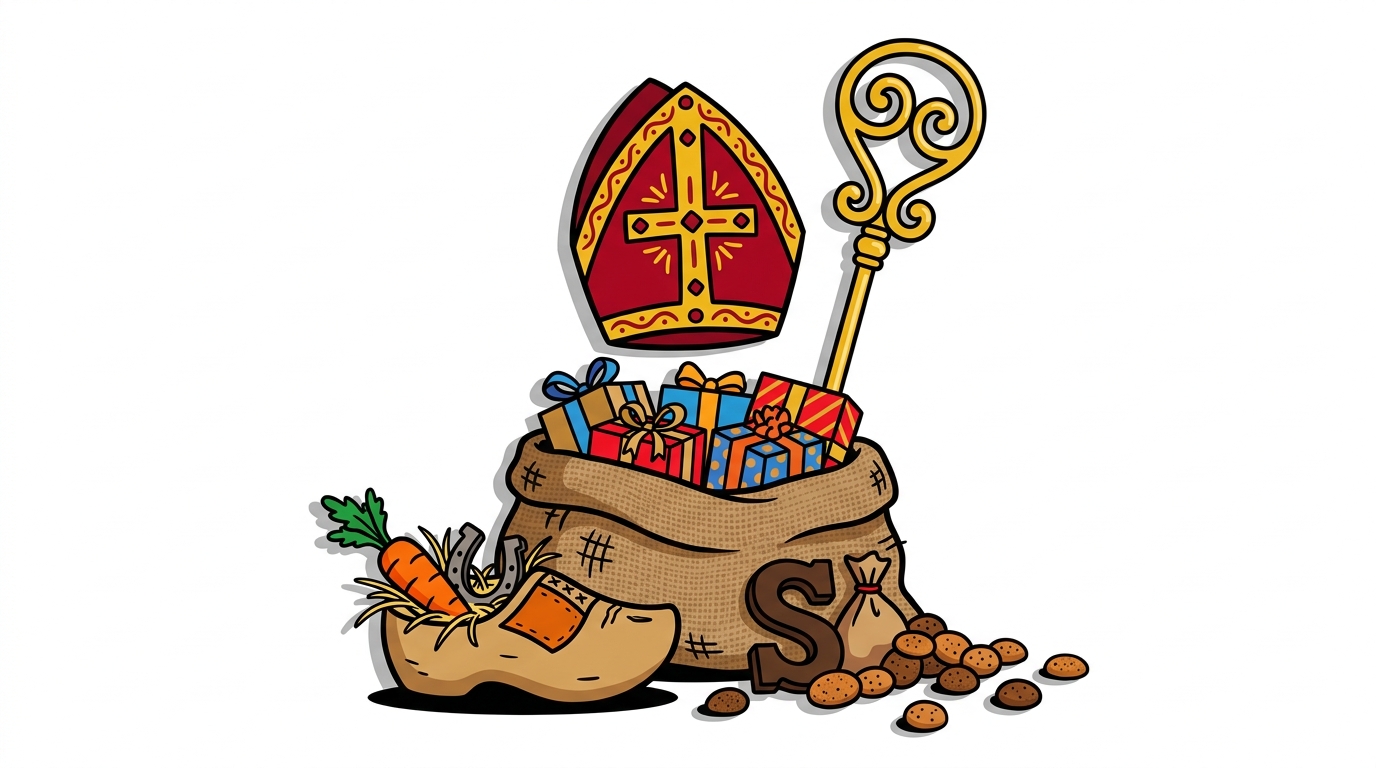
What is Sinterklaas Bingo?
Sinterklaas bingo is a festive game that fits perfectly with Pakjesavond (gift evening), school Sinterklaas celebrations, or a cosy family night around December 5th. Each player gets a unique bingo card filled with Sinterklaas icons: from shoes and carrots to steamboats and marzipan. The host calls out items (or draws them online via our presenter mode) and players cross them off. First with a full line shouts BINGO!
How does our generator work?
We've pre-loaded 80+ Sinterklaas-related words. You pick the card size (3x3, 4x4 or 5x5), number of cards, and click Generate. Every card is automatically shuffled — no two are the same. Then you can print them for free (first 20 cards are always free) or play online via our play mode where each participant gets their own card via QR code on their phone.
Meer over dit thema
Picture a Dutch living room on the evening of December 5th: children sit cross-legged on the floor, shoes lined up by the fireplace, eagerly waiting for the sound of hoofbeats on the roof. Sinterklaas, the beloved bishop from Spain, has been the centerpiece of Dutch December traditions since the Middle Ages, arriving each year by steamboat with his helpers to deliver gifts and sweets to good children. This centuries-old celebration predates modern Christmas gift-giving traditions and remains deeply woven into Dutch cultural identity, complete with its own songs, poems, and signature treats like pepernoten and speculaas.
Sinterklaas bingo transforms this rich tradition into an interactive game that brings the holiday's iconic symbols to life. In Dutch elementary schools during the first week of December, teachers use Sinterklaas bingo as an educational celebration tool for classes of twenty to thirty students aged six to ten, combining language practice with cultural reinforcement while managing the pre-holiday excitement. The game becomes a classroom management savior when children are too distracted for regular lessons but need structured activity. International schools teaching about world cultures find it equally valuable for introducing non-Dutch students to this unique tradition during multicultural awareness weeks.
Family gatherings on Pakjesavond itself provide the second natural setting. Extended families of twelve to twenty people spanning three generations use Sinterklaas bingo as an icebreaker before the main gift exchange begins, or as entertainment for children while adults prepare the evening meal. The game bridges age gaps beautifully, allowing toddlers who recognize pictures of pepernoten to play alongside grandparents sharing memories of Sinterklaas celebrations from their own childhoods.
Dutch community organizations abroad, particularly in the United States, Canada, and Australia, represent the third key audience. Expatriate communities hosting Sinterklaas festivals for fifty to two hundred attendees need activities that educate children born outside the Netherlands about their heritage while entertaining mixed groups of Dutch speakers and curious locals. Event coordinators at these gatherings appreciate how bingo requires minimal explanation yet creates maximum participation.
Parents of young children benefit most from ready-made Sinterklaas bingo cards, avoiding hours of design work during an already busy season. Teachers appreciate the zero-preparation aspect when balancing December's competing demands. Cultural organization volunteers and HR managers at Dutch companies need scalable activities that work for both intimate and large groups without requiring specialized knowledge or expensive materials.
Playing Sinterklaas Bingo Successfully
Preparation for Sinterklaas bingo requires gathering small treats authentic to the holiday. Fill a bowl with pepernoten, kruidnoten, chocolate letters, or wrapped speculaas cookies to use as markers on bingo cards. These edible markers serve double duty as prizes and snacks, keeping children engaged throughout multiple rounds. Alternatively, use small marzipan figures, chocolate coins wrapped in gold foil, or mini stroopwafels. Print one unique bingo card per player using the generator, ensuring no two cards are identical for fair play. Have a separate master list of all possible items to call out, and designate one person as the caller who knows enough about Sinterklaas traditions to add brief context when announcing each item.
For younger players aged four to seven, try the Picture Recognition variant: instead of calling item names, the caller holds up printed images of each symbol while children match pictures on their cards. This works perfectly for preschool Sinterklaas parties where reading skills vary. For older children and adults, introduce the Sinterklaas Story variant where the caller weaves items into a narrative about Sinterklaas's journey from Spain, and players mark items as they hear them mentioned organically in the story.
Card size depends on your group composition. Five-by-five cards with twenty-four items plus a free space work best for mixed-age family gatherings of eight to fifteen people, providing enough variety without overwhelming young players. Three-by-three cards suit classroom settings with twenty-plus young children where rounds need to finish quickly, approximately five to seven minutes each. Four-by-four cards strike the middle ground for community events with diverse age groups.
Timing matters significantly during Pakjesavond celebrations. Play one or two quick rounds immediately after dinner while everyone is still gathered but before the main gift exchange begins. Each round takes roughly eight to twelve minutes depending on card size. For classroom parties, schedule bingo during the final thirty minutes of the school day when concentration for academic work has vanished but structured activity remains necessary. Community events benefit from running continuous bingo rounds at a designated station where families can drop in and play between other activities.
Classic Sinterklaas Bingo Symbols
These twelve items capture the essential elements that make Sinterklaas instantly recognizable to Dutch families everywhere.
- Pepernoot — These tiny spiced cookies are scattered by helpers throughout the celebration, and the tradition of throwing pepernoten into crowds dates back centuries as a symbol of abundance and good fortune.
- Stoomboot — The steamboat brings Sinterklaas from Spain to the Netherlands each November, a tradition formalized in the 1850s when the first children's books established the bishop's Spanish origin story.
- Mijter — The tall pointed bishop's mitre worn by Sinterklaas distinguishes him from other gift-bringers and reflects his origins as Saint Nicholas of Myra, a fourth-century Christian bishop known for secret gift-giving.
- Pakjesavond — December 5th evening is the main gift-giving occasion in Dutch households, often more important than Christmas Day itself, when families exchange elaborately wrapped surprises accompanied by personalized poems.
- Schoen — Children place their shoes by the fireplace or door with a carrot for Sinterklaas's horse, hoping to find them filled with small treats and gifts the next morning during the weeks leading up to December 5th.
- Speculaas — These windmill-shaped spiced cookies featuring embossed designs were originally created in the shape of Sinterklaas himself, and the recipe dates back to Dutch colonial trade routes that brought exotic spices from Indonesia.
- Wortel — The carrot left for Sinterklaas's white horse Amerigo connects children to the practical care of animals and reinforces the reciprocal nature of giving that defines the holiday's moral lessons.
- Gedicht — Every Sinterklaas gift must be accompanied by a personalized poem, often humorous or gently teasing, that reviews the recipient's year and reflects the Dutch cultural value of thoughtful, personalized giving over commercialism.
- Surprise — The elaborate, creative wrapping or disguise of a gift is often more valued than the gift itself, with families spending hours crafting newspaper-based sculptures, boxes within boxes, or treasure hunt clues.
- Staf — The golden bishop's staff or crozier carried by Sinterklaas serves as both a symbol of his religious authority and a practical tool for steadying himself on Dutch rooftops during gift delivery.
- Marsepein — Marzipan treats molded into fruits, vegetables, and figures are traditional Sinterklaas sweets, with the almond-based confection having been a luxury item in the Netherlands since medieval trade guilds controlled its production.
- Schoorsteen — The chimney serves as Sinterklaas's entry point into Dutch homes, with children singing songs about whether their chimney is wide enough and leaving it accessible for the bishop's nocturnal visits.
Four Ways to Play
Team Sinterklaas competition works beautifully for larger family gatherings or classroom settings. Divide players into two or three teams named after elements of the tradition—Team Stoomboot, Team Pepernoten, Team Surprise—and have teams share several bingo cards. When a team gets bingo, all members receive a small prize, such as a chocolate letter or a small bag of kruidnoten. This variation reduces the disappointment younger children feel when they don't win individually and encourages cooperation and shared excitement during the game.
Pattern variations add thematic flair to standard bingo. Instead of requiring five in a row, challenge players to complete a Mijter Shape by marking items forming a cross pattern on their card, or a Stoomboot Shape requiring the entire top row and center column. For advanced players, require a Surprise Pattern where they must get the four corners plus dead center, representing the surprising nature of Pakjesavond gifts. Announce the required pattern before starting each round so players know what they're working toward.
Prize selections should honor Sinterklaas traditions rather than generic rewards. Winners receive chocolate letters corresponding to their first initial, small bags of mixed pepernoten and kruidnoten, speculaas cookies, marzipan figures, or small wrapped books (Sint always emphasizes literacy). For classroom settings, teachers might award Sinterklaas-themed erasers, pencils, or stickers. The ultimate prize for adult players at community events could be a package of authentic Dutch imports including stroopwafels and advocaat. Avoid prizes unrelated to the holiday to maintain thematic consistency.
Online or hybrid Sinterklaas bingo serves Dutch families separated by distance, particularly expatriate communities. Use video conferencing to connect relatives across continents, with one person screen-sharing the call list while players use printed cards at their individual locations. This format has become especially popular for families with members who emigrated to North America or Australia but want to maintain holiday traditions. Create a shared digital document where remote players can mark their progress, or simply have everyone hold their cards up to the camera to verify wins. The virtual format allows grandparents in the Netherlands to play simultaneously with grandchildren born abroad, preserving cultural continuity across generations.